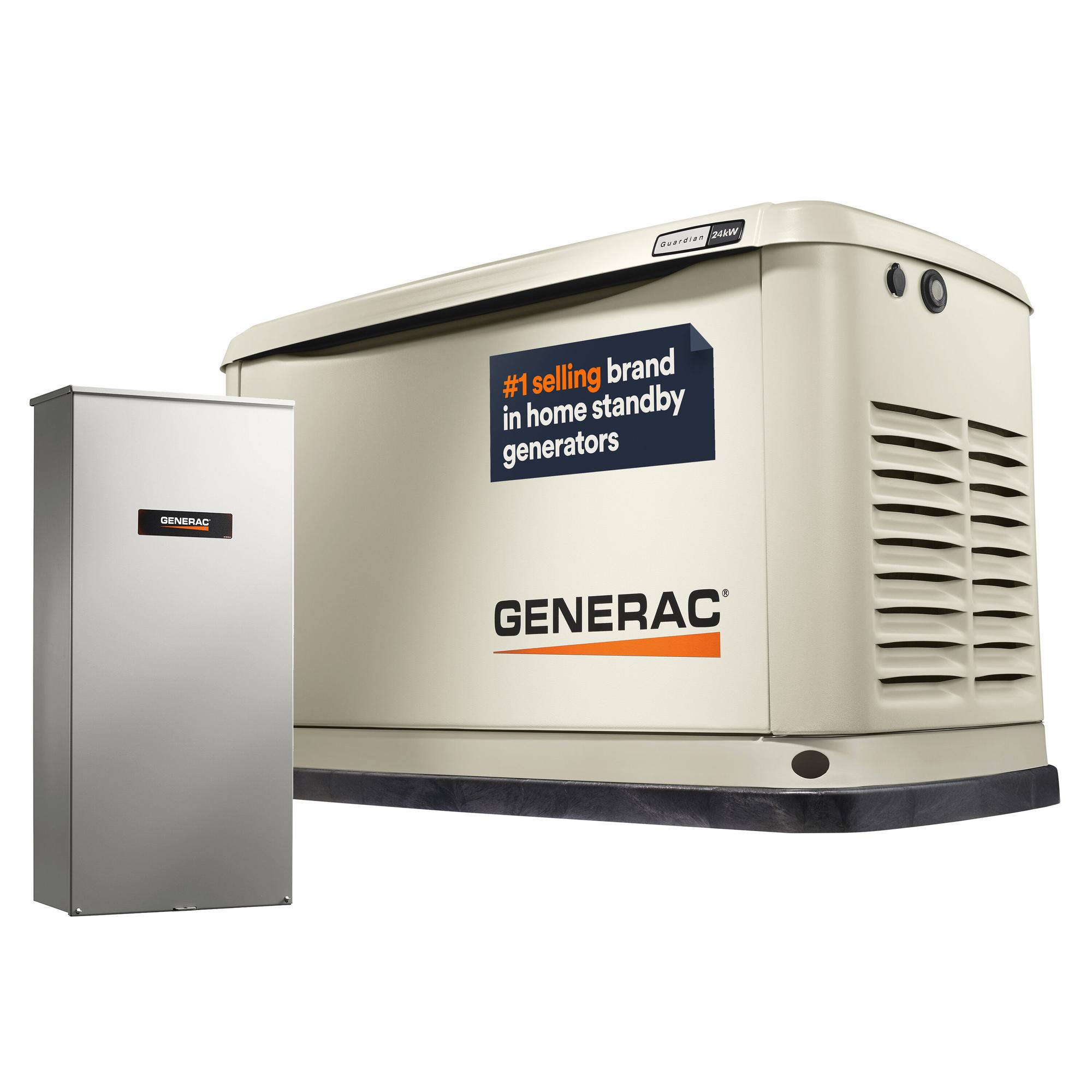
Generac Guardian 24kW Standby Generator + 200A Transfer Switch

Whole-Home Energy Resilience: A Southern Utah Homeowner’s Guide to Backup Power

When the temperture climbs past 105°F during a St. George summer, electricity stops being a matter of convenience - it becomes a critical issue of safety, comfort, and home preservation. Extreme heat waves, intense desert monsoon storms, and grid strains across Washington County mean power outages can hit when you need your central air conditioning, refrigeration, and medical devices the most.

At Jim Savage Construction, we take a complete-system approach to home performance and resilience. Installing reliable backup power isn't as simple as rolling a portable generator out into the extreme heat; it requires coordinated trade work across concrete foundations, high-capacity electrical panels, gas lines, local permitting, and municipal setbacks.

To help homeowners across St. George, Hurricane, Ivins, and Washington select the ideal setup, we break home energy backup into three tiered solutions based on your performance needs, noise preferences, and power requirements.

CHOOSING YOUR BACKUP POWER LEVEL

1. Whole-home power: Generac Guardian Standby

  • Runs continuous A/C
  • Unlimited duration

2. Silent & seamless: Tesla Powerwall 3

  • Instantaneous, silent
  • Solar-integrated

3. Flexible/ Essential: EcoFlow DELTA Pro Ultra

  • Scalable battery power
  • Essential circuit focus

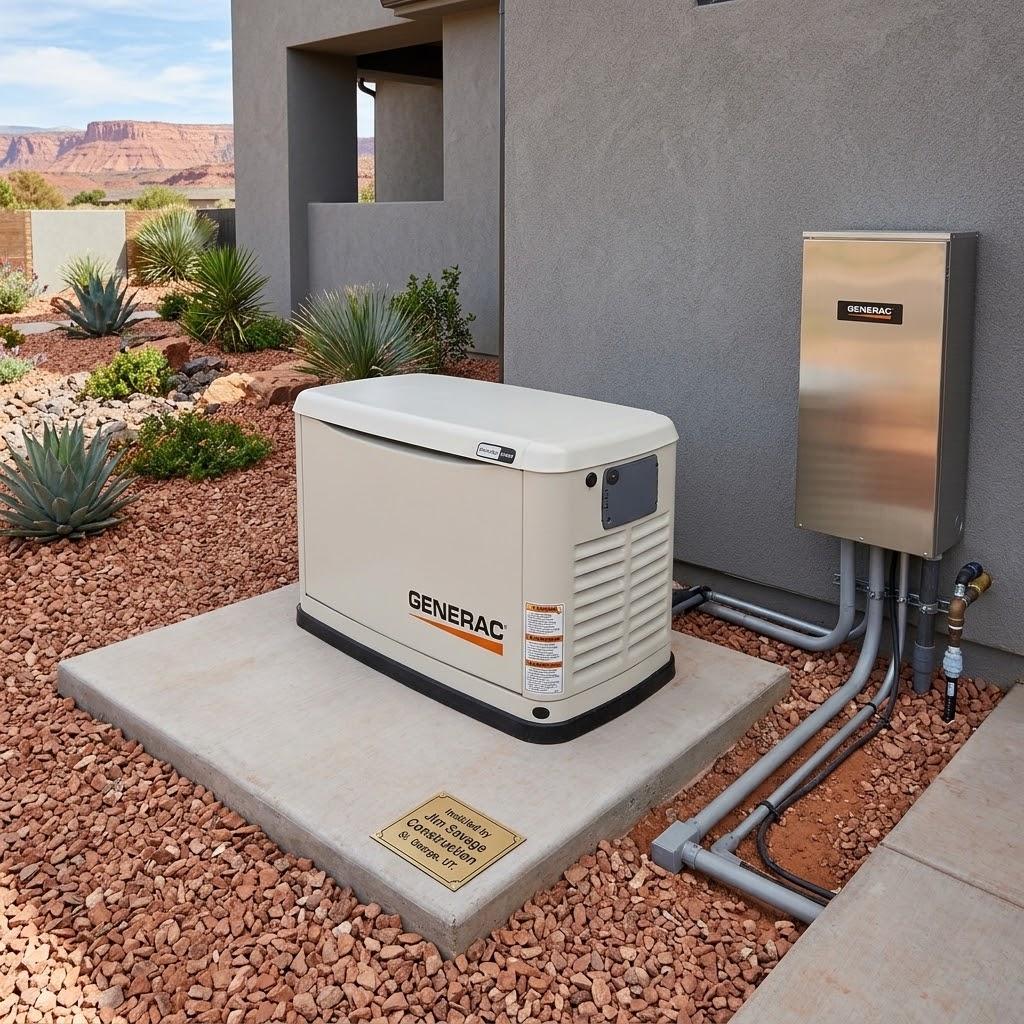
1. Generac Guardian 22–24 kW Standby Generator

Best For: Uninterrupted whole-home operation and long-duration outages.

If your goal during an outage is complete peace of mind—where your central air conditioner continues cooling, lights stay on, and kitchen appliances run without interruption—a natural gas or liquid propane standby generator is the gold standard.

  • How It Works: Connected directly to your home’s electrical panel via a 200-amp Automatic Transfer Switch (ATS), the system detects a grid failure instantly. Within seconds, the engine starts and automatically shifts your home’s electrical load over to backup power. When utility power returns, it seamlessly switches back.

  • The Desert Advantage: Fuel is supplied directly from your existing natural gas line or home propane tank. You never have to step out into triple-digit heat to haul gas cans or manually crank an engine.

  • Power Output: Delivers up to 22 kW on propane (and approximately 20–21 kW on natural gas depending on utility pressure and altitude), providing enough output to start and run continuous A/C compressors, pumps, and heavy appliances.

  • Turnkey Engineering Requirements: A standby generator requires a level concrete pad, a low-pressure gas line tie-in, high-capacity wiring, and proper municipal setback clearances from home windows and doors.

Turnkey Generac 22kW Whole-Home Power System St. George UT

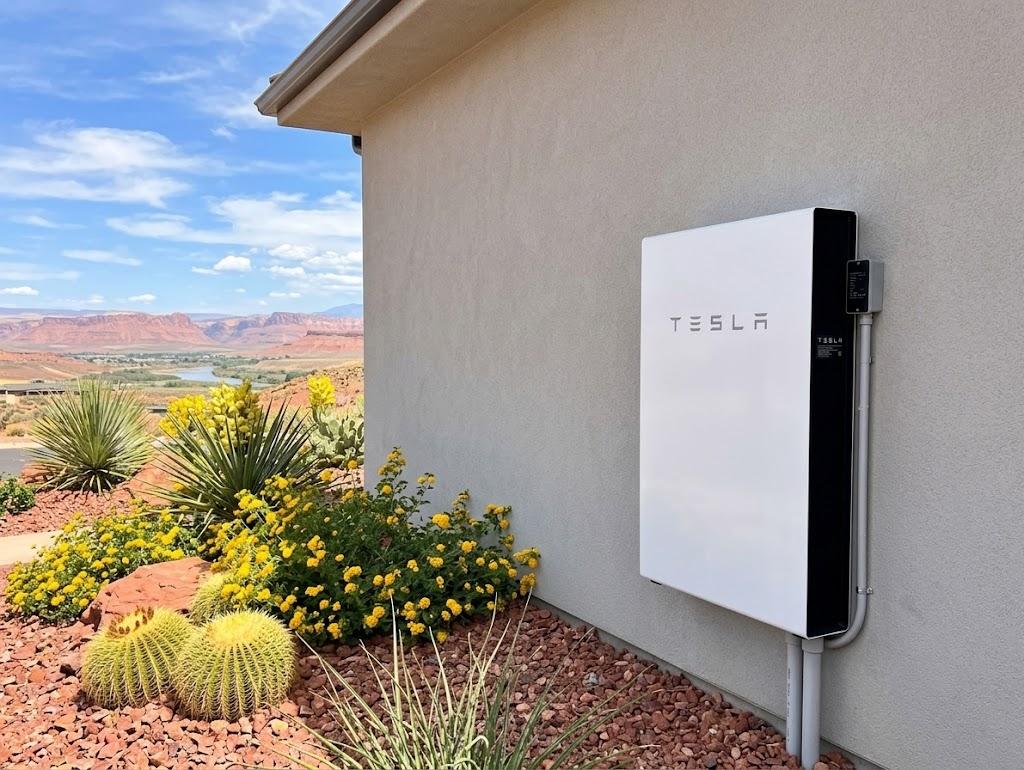
2. Tesla Powerwall 3

Best For: Silent whole-home energy backup and solar-integrated properties.

For homeowners in master-planned communities like Entrada, Desert Color, or SunRiver who prefer zero motor noise and zero fuel emissions, the Tesla Powerwall 3 offers a premium, modern alternative.

  • How It Works: Wall-mounted inside or outside your home, the Powerwall 3 stores grid or solar energy in a sealed lithium-iron-phosphate battery system. During a blackout, the switch is virtually instantaneous—your electronics, home automation, and lights won't even flicker.

  • Key Specifications: Each Powerwall 3 unit stores 13.5 kWh of energy and delivers up to 11.5 kW of continuous power. Crucially for Southern Utah homes, it features exceptional high-amp motor-starting capability to handle the initial power surge required by modern central air conditioner compressors.

  • Key Benefits: Completely silent operation, zero engine maintenance or oil changes, and seamless integration with existing rooftop solar arrays to recharge during daytime hours.

  • Sizing Considerations: Batteries have a fixed energy capacity. Running heavy A/C loads in the middle of a hot summer night requires precise load management or multiple stacked battery units to maintain power until sunrise.

St. George Home Tesla Powerwall 3 Solar Backup System

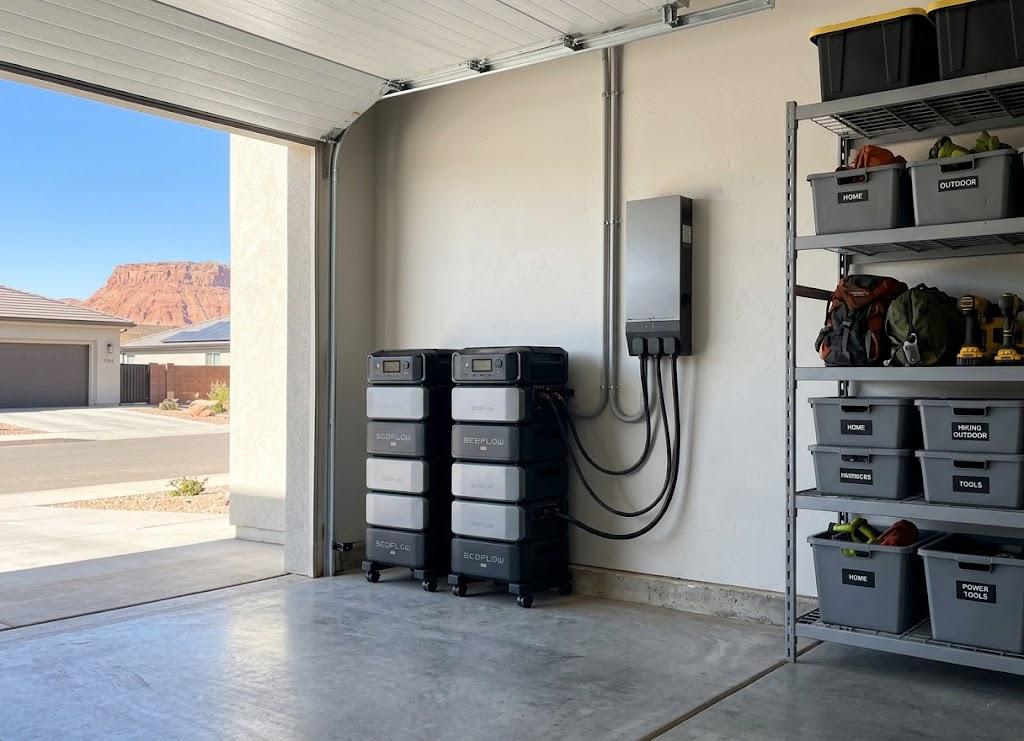
3. EcoFlow DELTA Pro Ultra

Best For: Scalable, flexible mid-tier power and targeted circuit backup.

If you don't need to run a 5-ton HVAC unit for days, but want to ensure critical circuits stay active without committing to a full-scale generator project, flexible battery systems offer the ideal middle ground.

How It Works: Paired with an automated transfer panel (like the Smart Home Panel 2), this system manages up to 12 dedicated circuits in your distribution panel. It powers critical home loads automatically during a blackout—such as your refrigerator, internet routers, lighting zones, garage door openers, and swamp coolers.

Modular Versatility: A single base unit delivers roughly 6.1 kWh of storage and 7.2 kW of continuous power. The system is modular, allowing homeowners to scale capacity over time by adding battery units or solar charging input as power needs grow.

The Advantage: Offers smart control, high-efficiency LFP battery safety, and lower upfront equipment costs, filling the space between portable tailgating generators and complex industrial back-up units.

Flexible EcoFlow Home Backup System St. George Utah Installation

Comparing Your Options

1. Generac 22–24 kW Standby Generator

  • Primary Advantage: Unlimited run-time via natural gas or propane connection

  • A/C Compatibility: Full 4-ton / 5-ton HVAC coverage

  • Fuel Source: Utility Natural Gas or Propane

  • Noise Level: Standard small-engine operation

  • Maintenance: Annual engine service and oil checks

2. Tesla Powerwall 3

  • Primary Advantage: Silent, instant backup and seamless solar sync

  • A/C Compatibility: Moderate (requires load planning)

  • Fuel Source: Stored electricity / Solar power

  • Noise Level: Completely silent

  • Maintenance: Zero engine maintenance

3. EcoFlow DELTA Pro Ultra

  • Primary Advantage: Scalable cost and modular setup

  • A/C Compatibility: Selective / mini-split or fan focus

  • Fuel Source: Stored electricity / Solar / Grid power

  • Noise Level: Whisper-quiet fans

  • Maintenance: Zero maintenance

Why Professional Turnkey Installation Matters in Washington County

Installing emergency backup power is not a simple weekend DIY job. It sits right at the intersection of structural work, heavy electrical engineering, and local municipal codes.

When adding standby energy infrastructure in Southern Utah, key technical details must be managed:

1. Air Conditioner Inrush Current (LRA)

Starting a central air conditioner requires a sudden spike in electrical current known as Locked Rotor Amps (LRA). A 4-ton or 5-ton A/C unit can draw 80 to 120+ amps for a fraction of a second when starting up. Without proper load calculation or soft-start kit installation, a generator or battery system can trip or stall upon start-up.

2. Permitting & Municipal Setbacks

Cities across Washington County enforce strict building codes regarding backup installations:

  • Setback Rules: Standby generators must maintain specified distances from property lines, operable windows, and fresh-air intake vents to meet fire and carbon monoxide safety codes.

  • Utility Approvals: High-output battery systems and automatic transfer switches require plan reviews and utility coordination (e.g., St. George Energy Services, Rocky Mountain Power) prior to main panel interconnection.

3. Integrated Trade Execution

A clean installation requires seamless coordination across multiple trades:

  • Concrete & Earthwork: Pouring structural concrete pads and trenching underground electrical conduits or gas lines.

  • Gas Piping: Sizing gas lines correctly to ensure the generator gets adequate BTU volume under full load.

  • Master Electrical: Mounting transfer switches, sub-panels, and main service disconnects cleanly to code.

Protect Your Home Before the Next Grid Stoppage

Whether you want full whole-home cooling, silent battery backup, or an essential circuit protection package, Jim Savage Construction handles the entire project from initial load assessment to final inspection.

Ready to evaluate your home's backup energy options?

Contact Jim Savage Construction today to schedule an on-site evaluation and custom site assessment.